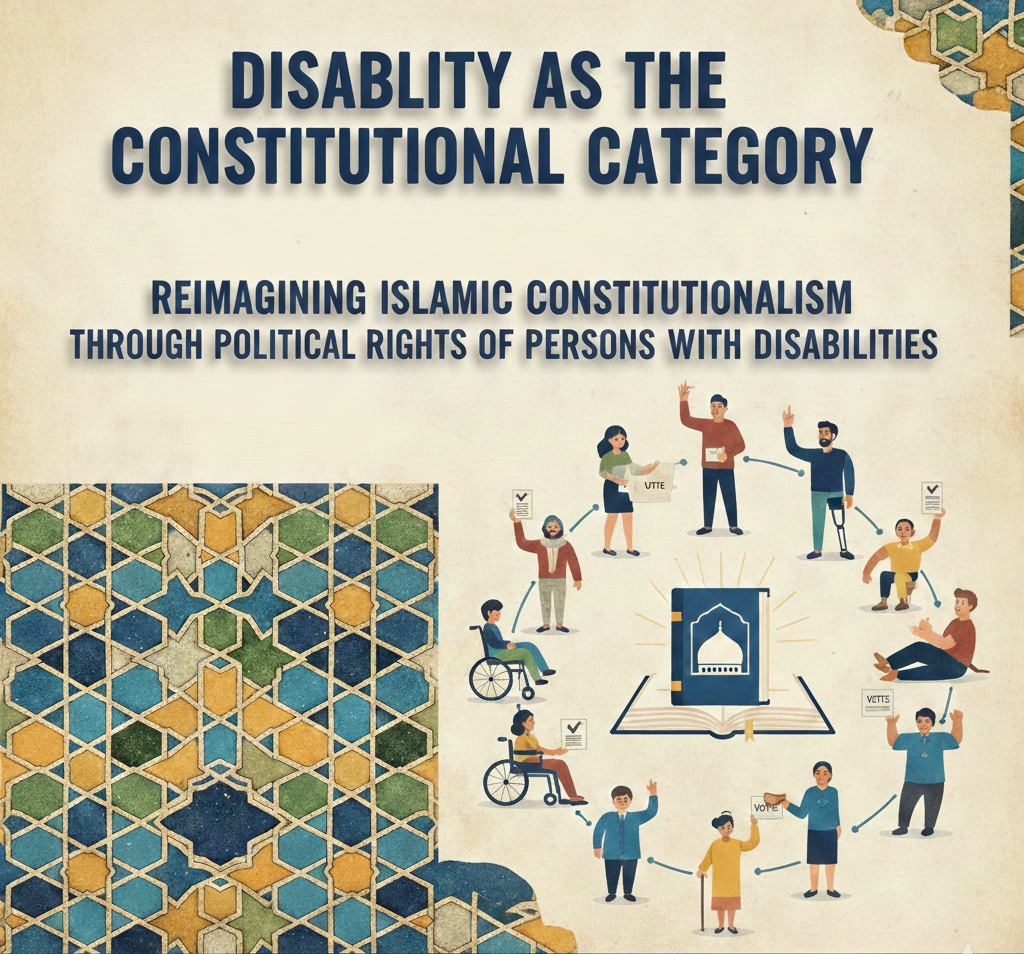
DISABILITY AS A CONSTITUTIONAL CATEGORY: REIMAGINING ISLAMIC CONSTITUTIONALISM THROUGH THE POLITICAL RIGHTS OF PERSONS WITH DISABILITIES
Abstract
This manuscript examines the intersection of disability rights and Islamic constitutionalism, arguing for the reconceptualization of disability as a fundamental constitutional category within Muslim-majority states. Through an analysis of classical Islamic jurisprudence, contemporary constitutional developments in Egypt, Tunisia, Indonesia, Malaysia, Pakistan,Bangladesh, Morocco, and Saudi Arabia, and the theoretical framework of Maqāṣid al-Sharī'ah (the higher objectives of Islamic law), this study demonstrates that Islamic constitutional traditions contain robust theological and legal resources for affirming the political rights of persons with disabilities. The manuscript traces the historical trajectory from the prophetic example of 'Abd Allāh ibn Umm Maktūm—the blind companion appointed by the Prophet Muḥammad as governor of Medina—to modern constitutional provisions that explicitly guarantee political participation for persons with disabilities. It argues that the classical juridical restrictions on leadership qualifications based on physical ability, particularly as articulated by al-Māwardī, represent historically contingent interpretations rather than immutable theological imperatives. The study proposes a reconstructive hermeneutic that centers the principles of human dignity (karāmah), justice ('adl), and maslahah (public welfare) to develop an inclusive Islamic constitutionalism that recognizes disability as a dimension of human diversity rather than a barrier to political citizenship. The findings suggest that Muslim-majority countries that have constitutionalized disability rights post-2010, particularly following the Arab Spring, demonstrate an emerging paradigm of "differentiated equality" that harmonizes Islamic ethical commitments with international human rights standards, particularly Article 29 of the Convention on the Rights of Persons with Disabilities (CRPD).