
International Relations Explained in Simple Words
International Relations, often called IR, is the study of how countries interact with each other. It explores how nations cooperate, compete, negotiate, and sometimes come into conflict. In simple terms, international relations helps us understand how the world works when it comes to politics, economics, and cooperation between countries.
GENERAL
Abdul Waheed Muhammad Arif
3/9/20262 min read
International Relations Explained in Simple Words
International Relations, often called IR, is the study of how countries interact with each other. It explores how nations cooperate, compete, negotiate, and sometimes come into conflict. In simple terms, international relations helps us understand how the world works when it comes to politics, economics, and cooperation between countries.
What Is International Relations?
Every country has its own government, priorities, and national interests. However, no country exists completely on its own. Nations depend on each other for trade, security, technology, and diplomacy. International relations studies these connections and tries to explain why countries behave the way they do in global affairs.
For example, when countries sign trade agreements, build alliances, participate in peace talks, or respond to global crises, they are all engaging in international relations.
Why International Relations Matters
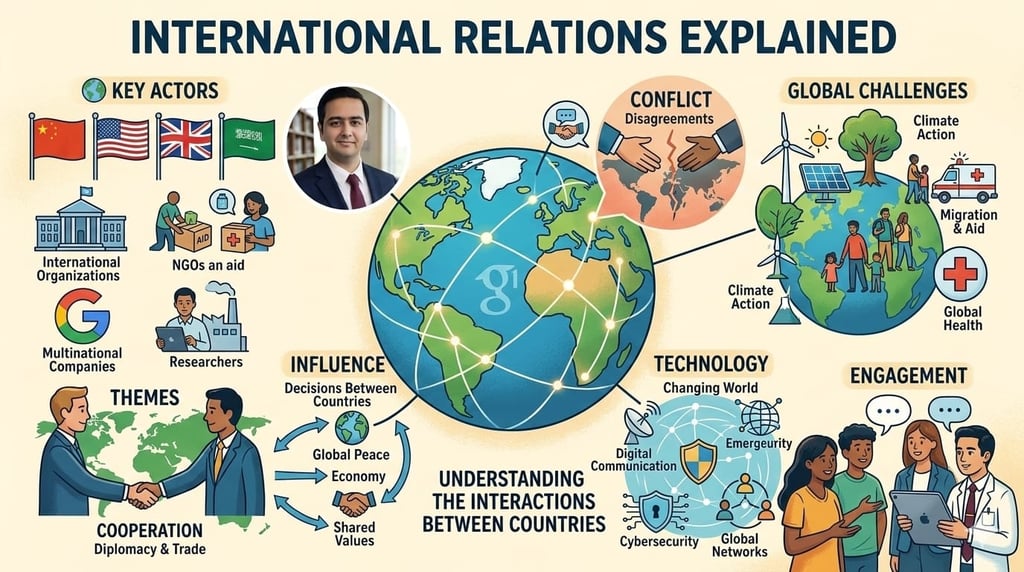
International relations influences everyday life more than many people realize. Decisions made between countries can affect several important areas, including global peace, the economy, environmental protection, and humanitarian efforts.
For instance, cooperation between countries can help address climate change, respond to natural disasters, and support communities affected by conflict. These international partnerships shape policies that impact people across the world.
Key Actors in International Relations
Countries, which are often called states, are the main actors in international relations. However, they are not the only ones involved. Many other groups also influence global affairs.
These include international organizations, non-governmental organizations, multinational companies, researchers, policy experts, and civil society groups. Youth movements and advocacy networks are also becoming increasingly important.
Organizations like the United Nations bring countries together to work on shared global challenges such as peacekeeping, humanitarian aid, and sustainable development.
Cooperation and Conflict
International relations includes both cooperation and competition. Countries sometimes work together to achieve common goals, such as improving global health or reducing poverty. At other times, disagreements may arise over territory, resources, or political influence.
To manage these disagreements peacefully, countries often rely on diplomacy. Diplomacy involves dialogue, negotiation, and agreements that help maintain stability and reduce the chances of conflict.
The Role of Ideas and Values
International relations is not only about power and strategy. Ideas and values also play an important role in shaping global interactions. Concepts such as justice, human rights, and international law influence how countries treat each other and their own citizens.
For example, international agreements on human rights encourage governments to respect the dignity and freedoms of individuals. These shared principles help create a foundation for cooperation among nations.
Technology and the Changing World
Technology is transforming the way countries interact. Digital communication, artificial intelligence, and global information networks allow societies to connect more quickly than ever before.
Today, international relations also involves discussions about cybersecurity, technological development, and digital governance. As technology continues to evolve, it will play an even greater role in shaping global politics and cooperation.
The Role of Youth and Researchers
Young people and researchers are increasingly contributing to international discussions. Through academic research, policy debates, and international dialogue, they bring new perspectives to complex global challenges.
Their ideas and innovations can help shape policies that promote peace, sustainability, and cooperation across borders. Inclusive participation from diverse voices is essential for building a more stable and connected world.
Conclusion
International relations helps us understand how countries interact and why those interactions matter. It explains global cooperation, conflicts, diplomacy, and collective efforts to address challenges that affect humanity.
In simple words, international relations is about how nations work together, negotiate their differences, and try to shape the future of the world.