
Islamic Studies Explained in Simple Words
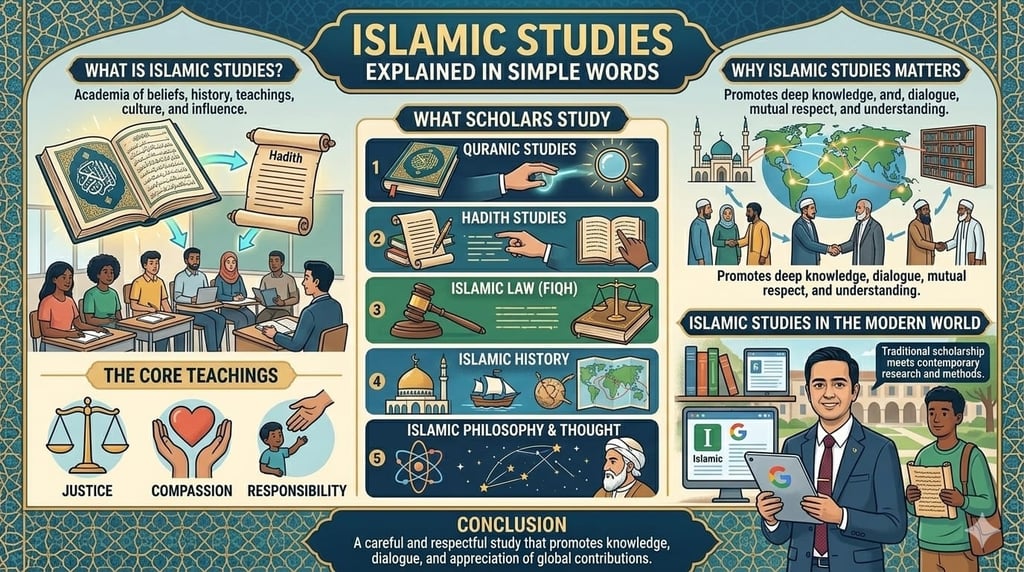
Islamic Studies is the academic study of Islam. It looks at the religion’s beliefs, history, teachings, culture, and its contributions to human civilization. In simple words, Islamic Studies helps people understand what Islam teaches and how it has influenced societies, ideas, and cultures throughout history.
GENERAL
Abdul Waheed Muhammad Arif
3/9/20262 min read
Islamic Studies Explained in Simple Words
Islamic Studies is the academic study of Islam. It looks at the religion’s beliefs, history, teachings, culture, and its contributions to human civilization. In simple words, Islamic Studies helps people understand what Islam teaches and how it has influenced societies, ideas, and cultures throughout history.
What Is Islamic Studies?
Islamic Studies explores both the teachings of Islam and the historical experiences of Muslim communities around the world. It studies the religious texts, traditions, and intellectual heritage that have shaped Islamic thought and practice for centuries.
The two main sources studied in Islamic Studies are the Qur'an, which Muslims believe is the word of God, and the Hadith, which record the sayings and actions of Prophet Muhammad. These sources guide Muslims in matters of faith, ethics, law, and everyday life.
What Do Scholars Study in Islamic Studies?
Islamic Studies is a broad field that includes many different areas of learning. Scholars often focus on topics such as religious texts, law, history, philosophy, and culture.
Qur'anic Studies focuses on understanding the message, language, and interpretation of the Qur'an. Scholars study its verses carefully to explore their meanings and the context in which they were revealed.
Hadith Studies examines the sayings and traditions of Prophet Muhammad. Researchers analyze their authenticity, historical background, and significance in Islamic teachings.
Islamic Law (Fiqh) studies the legal and ethical system developed from Islamic teachings. It looks at how scholars interpreted the Qur'an and Hadith to guide Muslims in different aspects of life.
Islamic History explores the development of Muslim societies across different regions and time periods. It looks at how Islamic civilizations grew and interacted with other cultures.
Islamic Philosophy and Thought studies the intellectual traditions of Muslim scholars. It explores how they discussed important questions about ethics, knowledge, spirituality, and the nature of reality.
Why Islamic Studies Matters
Islamic Studies plays an important role in helping people understand one of the world’s major religions. It provides insight into the beliefs, values, and traditions followed by millions of people across different cultures and regions.
Learning about Islam also helps promote dialogue and understanding between different communities. When people understand each other’s beliefs and histories, it becomes easier to build respect and cooperation.
The Ethical Teachings of Islam
A central theme in Islamic teachings is the importance of justice, compassion, and responsibility. Islam encourages believers to help those in need, protect vulnerable members of society, and promote fairness in their communities.
These values have inspired many charitable activities and social initiatives in Muslim societies throughout history.
Islamic Studies in the Modern World
Today, Islamic Studies is taught in universities, research institutions, and educational centers around the world. Scholars study classical Islamic texts while also discussing modern challenges such as ethics, globalization, technology, and social change from an Islamic perspective.
Many researchers combine traditional scholarship with modern research methods to better understand how Islamic teachings relate to the issues faced by societies today.
Conclusion
In simple terms, Islamic Studies is the study of Islam, its teachings, texts, history, and ideas. It helps people understand how Islamic beliefs shape the lives of millions of individuals and how Islamic civilization has contributed to global knowledge and culture.
By studying Islam thoughtfully and respectfully, Islamic Studies encourages learning, dialogue, and a deeper appreciation of one of the world’s most influential religious traditions.